
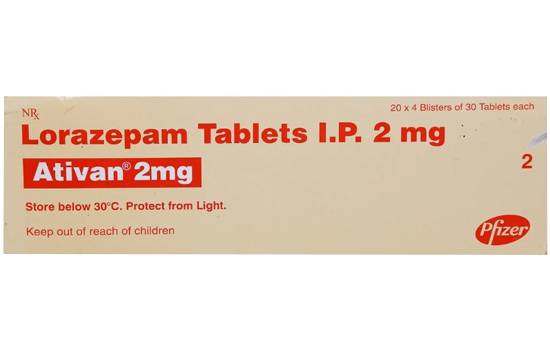
Lorazepam Tablets UK – Trusted Online Pharmacy Delivery
£5.27 £0.83
As one of the most popular benzodiazepines recommended by UK healthcare professionals, Lorazepam is typically used orally or intravenously to provide users with rapid relief from panic attacks, anxiety, or extreme seizures. It does this by enhancing the calming abilities of gamma-aminobutyric acid (GABA) in the brain. This inhibitory neurotransmitter slows brain activity by blocking certain signals in the central nervous system (CNS).
Unlike other benzodiazepines that are processed in the liver through the cytochrome P450 pathway, lorazepam uses direct glucuronidation, allowing patients to feel the effects faster. This process has been proven to be more reliable because it doesn't break down into active metabolites.
Chemical Structure and Composition
As a member of the benzodiazepine family with a 3-hydroxy configuration, lorazepam is set apart from other drugs in the same category. By acting on the brain's GABA-A receptors, users will be able to quickly feel relief from anxiety or panic attacks.
Lorazepam's chemical structure yields multiple practical advantages, the main one being its ability to metabolise directly in the body without breaking down into other active chemicals, which can affect the body on their way out. Due to its straightforward breakdown in the body, its effects are more predictable and have less risk of interaction with other medicines.
The Lorazepam Effects
Lorazepam is known for its six main therapeutic effects. Anxiety relief, also known as anxiolysis, provides patients suffering from panic attacks with the ability to quickly calm down and regain control over their emotions.
Anterograde amnesia, or the inability to create new memories, is useful in reducing psychological trauma in a medical setting, especially when taken before surgery. Sedation and hypnosis can also help patients who are about to go under the knife with their anxiety and discomfort.
Lorazepam's anticonvulsive properties make it useful in treating dangerous seizures. While its antiemetic effect reduces or prevents nausea and vomiting. It also has muscle relaxation abilities.
Pharmacokinetics - How Does the Body React?
When taken orally, lorazepam is around 90% bioavailable. This is the ease with which a substance is absorbed into the body, meaning most of this medication is able to enter the bloodstream. After it is ingested and absorbed, it travels to the brain, where it boosts the calming abilities of the neurotransmitter, GABA.
As a result, users will notice they experience less worry. Muscles will start to relax, and patients will likely experience less tightness or spasms in their muscles. Thanks to the reduction of brain activity, they can also make people feel drowsy and reduce seizures. Those who take lorazepam for too long will start to find that these effects lessen significantly over time.
Lorazepam Effect on GABA?
GABA-A is a chemical in the brain where benzodiazepine receptors are located. Lorazepam connects to these receptors, which are then spread across the CNS. This enhances GABA's inhibitory effects on the body by opening up the body's calming pathways and allowing sedative signals to flow through. This results in overactive or excited brain activity being dampened down.
These actions result in the main therapeutic effects of the drug, including anxiety reduction, seizure stopping, sleepiness, muscle relaxation and, on occasion, amnesia.
How GABA works
The brain contains billions of tiny neurons that are constantly chatting with one another. GABA is the main chemical in the brain for calming and slowing down the constant chatter. GABA receptors will attach themselves to neighbouring neurons and bind to them, making it harder for the cells to become excited or fire a message.
Without enough GABA in one's system, excitatory brain activity can lead to anxiety disorders, epilepsy, and insomnia. While lorazepam doesn't create more GABA, it increases the existing chemical's potency. By instructing specific cells in the brain to slow their activity down, feelings of control and relaxation are able to manifest.
Central Nervous System
Lorazepam works its anti-anxiety magic in the amygdala. This is the brain control centre for fear and stress. By inhibiting activity in the cerebral cortex, it puts a stop to abnormal electrical activity that could result in seizures.
This medication utilises passive diffusion to cross the blood-brain barrier quickly. When administered intravenously, the effects can be felt by the patient in 1 to 3 minutes. It affects the limbic system and ascending reticular formation, parts of the CNS that are mainly concerned with consciousness and arousal.
Treatment Uses?
Lorazepam can be used for a variety of conditions and situations. It's most commonly utilised as a short-term treatment for anxiety disorders and insomnia caused by anxiety. In emergencies, it can be used to quickly control dangerous seizures. Thanks to its speed and reliability, it is often a first-choice medication for pre-surgery and acute care.
Anxiety Disorders
Lorazepam has been approved by the U.S Food and Drug Administration (FDA) for temporary help with anxiety disorders such as generalised anxiety disorder (GAD), panic disorder (off-label) and stress-related insomnia.
While the beginning dose depends on a doctor's recommendation, UK patients typically start oral treatment at 2 to 3 mg taken two or three times daily. To avoid any adverse effects, users should not consume more than 10mg a day. For insomnia, 0.5 to 2mg can be taken once nightly before bed. Elderly patients who are 65 and older should keep their bedtime dosage below 1mg and may be recommended a lower dose for other conditions as well. lorazepam online is only meant as a short-term treatment, meaning it should be taken for less than 4 weeks to prevent dependence and tolerance build-up.
Sedation Before Surgery
Lorazepam is often used to sedate patients before a medical procedure. In these cases, they are typically given an intramuscular injection two hours prior at a dose of 0.05mg/kg, not exceeding 4mg. The medication will then begin to take effect within 15 to 20 minutes.
It may also be administered 15-20 minutes before the operation via IV at 0.044mg/kg with a maximum dose of 4 mg for people under 50, or 2mg for older patients. This method gives the fastest onset and can be felt within 1 to 3 minutes. Lorazepam is preferred by UK healthcare providers because it makes patients less anxious pre-op, and sometimes unable to even recall the procedure. It is also safer to use on people with heart problems who require sedation.
Easing Epileptic Seizures?
IV lorazepam is listed as a preferred UK treatment for status epilepticus by the American Epilepsy Society. Unlike similar medications such as diazepam, lorazepam online is faster acting and longer lasting, reducing the risk of the seizure's return.
In emergency situations, use 0.1 mg/kg IV, limited to 4mg. Doctors should dilute it 1:1 with saline at a maximum infusion rate of 2mg per minute. If the patient is a child, it can still be used as it is approved for treatment of paediatric convulsive status epilepticus and is dosed based on body weight. This medication works quickly, within 3 minutes. If the seizures continue, the dose can be repeated every 5 to 10 minutes.
Agitation Control
In a UK hospital setting, agitated patients pose a threat to themselves and others, making quick sedation a priority in these cases. For this reason, ERs and ICUs will turn to lorazepam for safe and fast sedation. As per ICU general protocol, a dosage of 0.02-0.04 mg/kg is used with a max dose of 2mg. To maintain sedation, 0.02-0.06 mg/kg every 2-6 hours if needed will suffice.
Users experiencing alcohol withdrawal will find that a 1 to 4 mg IV dose every 5-15 minutes will help them calm down fast. This is preferred over other sedative methods because it doesn't break down into active metabolites, making it safer for people with alcohol-related liver disease. To increase lorazepam's effectiveness, the American College of Emergency Physicians suggests using it alongside antipsychotics like haloperidol if the agitation is especially severe.
Understanding the Risks and How to Use It Safely
Like any medication, UK users need to know the risks of lorazepam and how to utilize the drug safely. This includes its neurological impact as well as issues associated with dependence and tolerance. Patients should be carefully monitored by their healthcare provider because of these possible concerns, especially in cases involving people who have suffered from substance abuse.
While most people will not experience them, side effects or adverse reactions are also possible. Being aware of what they are and how to manage them is one of the aspects of responsible use that will keep patients safe as they start, continue, or discontinue lorazepam.
Common and Side Effects or Reactions
The most prevalent side effects of lorazepam affect more than 1 in 100 people. Women are 60% more likely to get them than men. These reactions include sedation, dizziness, weakness, and unsteadiness. During the day, patients may feel disoriented or drowsy. In this case, the person in question should avoid driving or operating heavy machinery.
Adverse psychiatric reactions include substance abuse, psychotic episodes, and attempted suicide. Neurologically, users may experience stupor or delirium, and physical events could also cause people to have balance or cognitive problems. Users should prioritise discussing these reactions with their doctor if they have them.
Avoiding and Managing Withdrawal
As with other benzodiazepines, taking lorazepam can cause withdrawal if not taken responsibly. Withdrawal is a state the body falls into when it gets used to a substance and is then suddenly deprived of it. While it can be mild and tolerable for some drugs, it can and should be avoided with this medication as it could trigger serious, sometimes life-threatening effects.
While individuals will experience withdrawal from lorazepam differently, commonly reported symptoms include severe rebound anxiety or panic attacks, seizures, tremors, sweating, insomnia, and agitation. These can easily be avoided by only taking medication as instructed by a doctor or GP. They typically instruct patients to taper off the drug slowly over the course of weeks or months, depending on the dose and length of time it's been taken for.
Potential Dependency
When benzodiazepines are taken regularly, the body becomes used to the chemical and adjusts itself accordingly. This is known as physical tolerance. Over time, higher doses are required to get the same effect they felt when they first started. This typically happens within weeks, which is why lorazepam is only recommended as a short-term treatment in the UK.
Long-term use also exposes the patient to the risk of dependency. This is when the body gets used to the chemical to the point where it “needs' it to function. This is why it becomes harder to quit as time goes on.
New and Varying Uses
Current UK scientists and researchers are looking at expanding lorazepam's uses. While doing this, there are still strict safety concerns that they have to address. This is to ensure that future medications will be made safer, faster-acting, and more stable.
Developing this medication to treat other conditions other than anxiety and seizures is the goal that recent findings highlight. Some new solutions include:
Sublingual tablets - For acute anxiety and panic attacks
Intravenous injection (IV) - Procedural sedation
Intramuscular injection (IM) - Catatonia
These different formulations provide patients with additional benefits compared to regular tablets. Each of these solutions, in relation to its targeted condition, gives people extremely targeted results, which are not delayed by the digestive system.
Current Research & Scientific Developments
Recent pharmacovigilance studies are focusing on the real-world impact that lorazepam has on long-term users. Collecting evidence from dependent or high-tolerant individuals allows researchers to study the factors that increase this risk in future patients.
As mentioned above, catatonia research is gaining considerable attention. Scientists are testing how effective this medication can be in the treatment of these patients. Evidence suggests that this drug can work in as little as 10 minutes, which is a promising result.
This medication is also being researched in the older generation, in relation to its link to potential cognitive decline. Intense side effects, falls, and UK hospital stays are other factors that are being studied as well. These studies involve reducing the medication strength to 0.5 - 4mg while observing the potential benefits and drawbacks.
Latest Findings
Neuroimaging systems are being used to observe the changes that long-term lorazepam use can have on the brain. Positron Emission Tomography (PET) scans can show scientists which areas of the brain light up when this medication is active. However, PET scans have also shown that long-term use is linked to a decrease in cerebral glucose metabolism.
There are also extended findings that highlight that neuroimaging can further improve anxiety treatment. These systems can analyse the white matter microstructure in the brain, and then determine which patients would respond better to medications like lorazepam online. This can remove the trial-and-error period that many patients go through, and they can have targeted efficacy for their condition.
Frequently Asked Questions
Lorazepam is a benzodiazepine with several unique properties that set it apart from other UK medications in the same category. Users should become familiar with optimal usage, drug interactions and long-term impact in order to maximise the probability of safe, successful treatment.
What is Lorazepam's Pharmacological Profile?
This medication belongs to a family of drugs called benzodiazepines. These work by binding to receptors on GABA-A chloride channels residing in the central nervous system (CNS). As a result, GABA's inhibitory abilities are boosted, causing an increase in chloride flow. This then triggers hyperpolarisation of nerve cells, which is a temporary cool-down state where they become less responsive.
Thanks to its high bioavailability, lorazepam online crosses the blood-brain barrier with relative ease via passive diffusion. When consumed orally, its effects can usually be felt within a half hour and peak in less than two hours. When used intravenously, the sedative effects can begin in one to three minutes and peak within an hour to 1.5 hours.
Lorazepam is processed in the liver through direct glucuronidation, a method of detoxification, allowing it to bind to plasma proteins and be excreted from the body through urination. This is different from some other benzodiazepines that utilise the cytochrome P450 pathway, which affects how it interacts with other substances like alcohol and grapefruit juice.
Does Long Term Lorazepam Use Affect Mental Health?
Long-term use of lorazepam may result in dependence and tolerance. This is when users need to increase their dose in order to feel the same relief they experienced when they first started taking it.
Additionally, using lorazepam for too long can negatively impact memory and concentration, and may worsen as the dose increases. Likewise, it potentially interferes with the patient's natural ability to manage stress and anxiety on their own.
Those who are stopping long-term use of lorazepam online will also have to be cautious, as quitting the medication cold turkey can cause insomnia, tremors, rebound anxiety, and, in the worst cases, seizures. UK doctors usually recommend benzodiazepines be taken in the short term, between 2 to 4 weeks max, to avoid these issues. Users who exceed this limit should taper off the medication slowly.
Is Lorazepam a Considered treatment in clinical settings?
Intravenous lorazepam is utilised as a first-line treatment for seizure emergencies like status epilepticus due to its rapid, reliable absorption. It's also the preferred benzodiazepine for UK patients with liver problems, as it is processed differently than similar medications within that category. Lorazepam is often used to treat alcohol withdrawal as well, particularly in people with chronic liver disease as a result of substance abuse.
In UK intensive care, lorazepam is used to calm extremely agitated patients due to its predictability and lack of active metabolites. For this reason, it can also help ease anxiety in patients before anaesthetic sedation.
What's the lorazepam Efficacy like compared to other Anxiolytics?
Lorazepam online works similarly on anxiety as other benzodiazepines such as alprazolam and diazepam. The main aspect that sets this drug apart is its direct metabolism, which is easier on the liver and produces more predictable results. In addition to its shorter half-life, this makes it preferable for elderly UK patients.
Lorazepam takes effect within hours, unlike SSRIs, which can take weeks to provide noticeable relief. It's likewise known to outperform drugs like Buspirone or hydroxyzine for sudden anxiety or panic attacks for similar reasons.
Are there guidelines for stopping Lorazepam safely?
Yes, people should avoid stopping lorazepam suddenly if they have been on a high dose or have been using it for a long time. Otherwise, it could result in side effects such as seizures or rebound anxiety. The most common tapering schedule entails reducing the daily dose by 10% to 25% every week. In more extreme cases, patients will have to taper for longer in smaller increments.
UK Patients should be regularly checking in with their health care provider during this process. Withdrawal can include feeling physically off, anxious and/or insomnia. Staying consistent will be easier if users build up other methods of anxiety management. Cognitive Behavioural Therapy (CBT) can help patients develop the necessary skills to cope with stress better on their own.